

Joe Biden
Images

Joe Biden


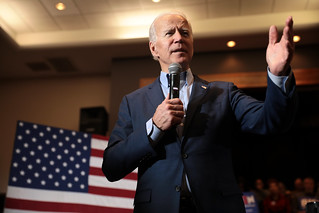


Early Life and Formative Years
Joseph Robinette Biden Jr. was born on November 20, 1942, in Scranton, Pennsylvania, to Catherine Eugenia 'Jean' Biden and Joseph Robinette Biden Sr. He was the eldest of four children in a Catholic family of Irish descent. During his childhood, the family experienced economic instability, moving from an affluent suburb in New York back to Scranton, and eventually settling in Claymont, Delaware, in 1953.
These experiences shaped his perspective on middle-class life. During his youth, Biden struggled with a stutter, a challenge he addressed by memorizing and reciting the works of Ralph Waldo Emerson and William Butler Yeats. This practice was instrumental in developing his oratorical skills.
At Archmere Academy, he was a standout athlete in football and baseball and served as class president. He continued his education at the University of Delaware, where he double-majored in history and political science, graduating in 1965. He later earned his Juris Doctor from Syracuse University College of Law in 1968.
Although his academic performance was modest, these years provided the foundation for his entry into the legal and political spheres.
Entry into Politics and Senate Career
Biden’s political career began in 1970 when he was elected to the New Castle County Council in Delaware. In 1972, he launched a campaign for the U.S. Senate against incumbent J. Caleb Boggs.
Despite being an underdog with limited funding, Biden’s focus on civil rights, the environment, and opposition to the Vietnam War resonated with voters, leading to a surprise victory. At 30 years old, he became the seventh-youngest senator in U.S. history. He would go on to serve in the Senate for 36 years, from 1973 to 2009.
During this tenure, he became known as 'Amtrak Joe' due to his daily commute by train between Delaware and Washington, D.C. As a senator, Biden held significant leadership roles, chairing both the Senate Judiciary Committee and the Foreign Relations Committee. He was a key figure in drafting major legislation, including the Violence Against Women Act and the Violent Crime Control and Law Enforcement Act.
His work on the Judiciary Committee included overseeing contentious Supreme Court confirmation hearings, such as those for Robert Bork and Clarence Thomas, which remain significant events in American legal history.
Vice Presidency and Foreign Policy
In 2008, Barack Obama selected Biden as his running mate. The pair won the election, and Biden served as the 47th vice president of the United States from 2009 to 2017. In this role, he served as a close advisor to President Obama, managing complex domestic and foreign policy issues.
His experience on the Senate Foreign Relations Committee was particularly valuable, as he had met with over 150 leaders from 60 countries during his time in the Senate. He was a prominent voice on international affairs, supporting the War in Afghanistan but later becoming a critic of the Iraq War, which he had initially voted to authorize. His work in the Balkans during the 1990s, where he advocated for intervention against Serbian abuses, was a highlight of his foreign policy career.
As vice president, he continued to be a key player in the Obama administration’s international engagements, helping to navigate the complexities of global diplomacy and maintaining strong relationships with international allies.
The Presidency (2021–2025)
In 2020, Biden was elected as the 46th president of the United States, with Kamala Harris as his vice president. His presidency began during the COVID-19 pandemic, and he quickly signed the American Rescue Plan Act to address the resulting economic recession. Throughout his term, he focused on bipartisan legislation, successfully passing significant infrastructure and manufacturing bills.
His administration also incorporated parts of his 'Build Back Better' proposal into the Inflation Reduction Act of 2022. In terms of judicial appointments, he successfully appointed Ketanji Brown Jackson to the Supreme Court. His foreign policy was marked by the U.S. reentry into the Paris Agreement, the withdrawal of troops from Afghanistan, and a robust response to the Russian invasion of Ukraine, which included sanctions and military aid.
He also supported the NATO membership bids of Finland and Sweden. During the Gaza war, he provided military and diplomatic support to Israel while also facilitating humanitarian aid to the Gaza Strip. His presidency concluded in 2025.
Legacy and Historical Significance
Joe Biden’s political career spans over five decades, making him one of the most experienced figures in modern American politics. His time in the Senate, as vice president, and as president has left a lasting impact on the nation’s legislative and foreign policy landscape. Throughout his presidency, he faced scrutiny regarding his age and health, becoming the first president to turn 80 while in office.
After initially running for reelection in 2024, he withdrew his candidacy following public debate and political pressure. As of October 2026, he holds the distinction of being the oldest living former U.S. president and the oldest living former vice president. His legacy is characterized by his long-term commitment to public service, his role in shaping major social and economic legislation, and his navigation of significant global crises.
His transition from a local council member to the leader of the United States reflects a lifetime dedicated to the mechanisms of government and the evolution of American political life.
See also
Based on content from Wikipedia · Licensed under CC BY-SA 4.0