

Napoleon III: The Emperor Who Changed Paris!
Images
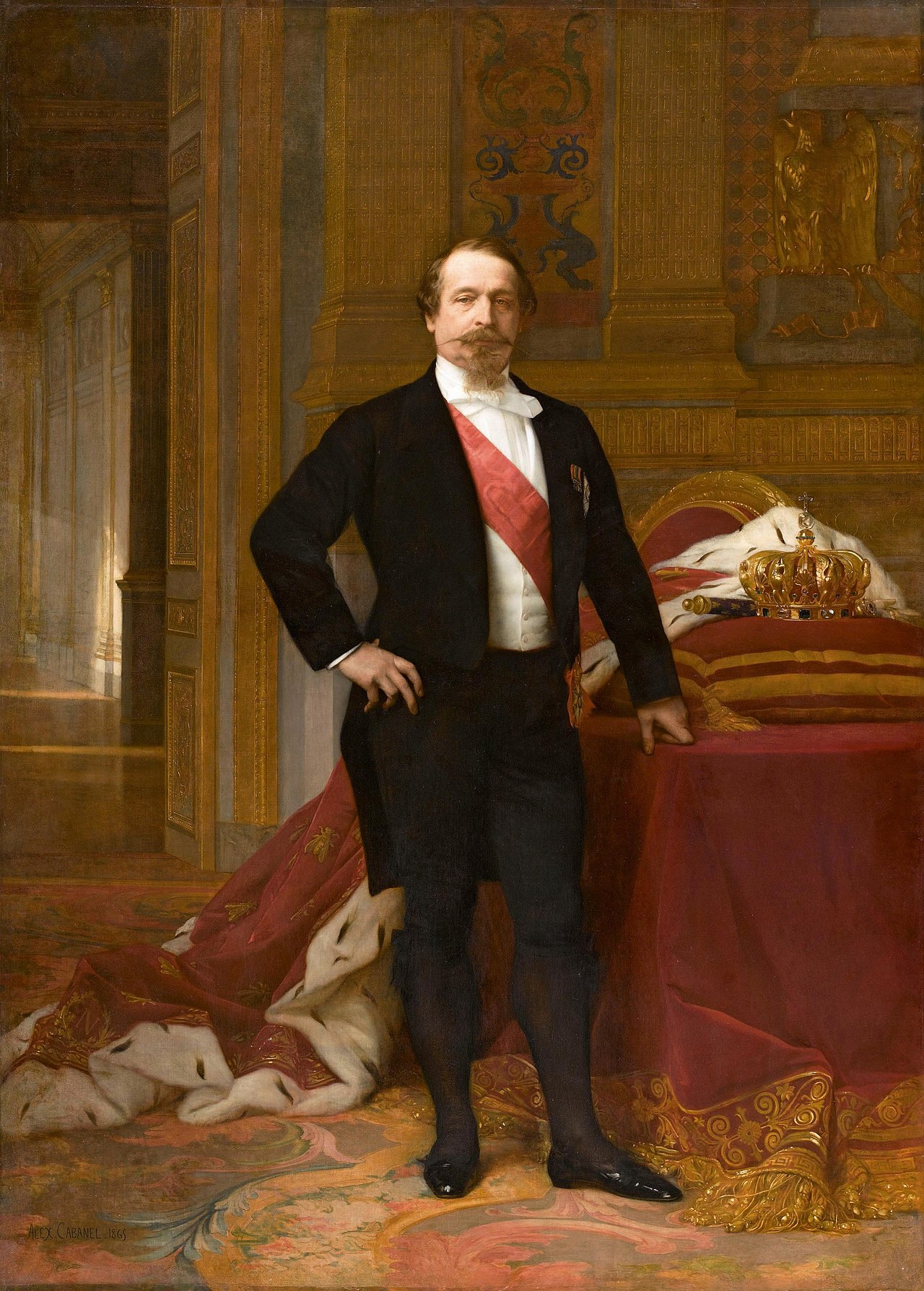
Napoleon III
Lineage and Early Political Development
Born on April 20, 1808, at the Tuileries Palace, Charles-Louis Napoléon Bonaparte was the son of Louis Bonaparte, King of Holland, and Hortense de Beauharnais. As the nephew of Napoleon I, his early life was defined by the rise and fall of the First French Empire. Following the Battle of Waterloo and the Bourbon Restoration, the Bonaparte family was forced into exile.
Louis Napoleon spent his formative years in Switzerland and Germany, where he received a rigorous education. His tutor, Philippe Le Bas, introduced him to republican ideals, which would later influence his unique political philosophy. During his youth in Italy, he became involved with the Carbonari, a secret revolutionary society, an experience that deepened his commitment to national causes.
By 1832, following the death of the Duke of Reichstadt, Louis Napoleon became the de facto heir to the Bonaparte dynasty. He spent his years in exile refining his political doctrine, which he detailed in works like 'Napoleonic Ideas.' He sought to reconcile the legacy of his uncle with the principles of popular sovereignty, advocating for a regime that provided the stability of an empire while maintaining the freedoms of a republic. His belief that he was a 'volunteer of providence' destined to lead France fueled his persistent, though initially unsuccessful, attempts to seize power.
The Path to the Presidency and Empire
Louis Napoleon’s early attempts to seize power, such as the 1836 Strasbourg coup and the 1840 Boulogne landing, were unsuccessful and resulted in his imprisonment at the fortress of Ham. During his six-year incarceration, he remained politically active, writing essays on poverty and economic reform, most notably 'L'extinction du pauperisme.' These writings gained him significant support among the working class. After escaping in 1846 by disguising himself as a laborer, he returned to London.
The 1848 February Revolution provided the opportunity he needed. Returning to France, he was elected president of the French Second Republic. When constitutional term limits prevented his re-election in 1851, he seized power by force.
In 1852, he proclaimed himself Emperor of the French, establishing the Second French Empire. His reign, which lasted 22 years, marked the longest period of continuous leadership in France since the Ancien régime. His administration was characterized by a focus on rapid industrialization, the modernization of the banking system, and the expansion of the national railway network, which collectively transformed France into a modern economic power.
Urban Transformation and Social Reform
One of the most enduring legacies of Napoleon III was the radical reconstruction of Paris. He appointed Georges-Eugène Haussmann to oversee the project, which replaced narrow, medieval streets with wide boulevards, public parks, and modern sanitation systems. This transformation aimed to improve public health and modernize the city's infrastructure.
Beyond urban planning, Napoleon III enacted significant social reforms. He recognized the rights of workers to organize and strike, and he took the progressive step of allowing women to be admitted to universities. His agricultural policies, which included the establishment of modern farming techniques, were highly successful, effectively ending famines in France and turning the nation into a major agricultural exporter.
Furthermore, he negotiated the 1860 Cobden–Chevalier Treaty with Britain, which promoted free trade and strengthened France's economic ties with its European neighbors. His support for the construction of the Suez Canal in Egypt further demonstrated his commitment to global infrastructure and international commerce.
Foreign Policy and Global Influence
Napoleon III’s foreign policy was driven by a desire to restore French prestige on the world stage. He successfully allied with Britain to defeat Russia in the Crimean War (1853–1856), which re-established France as a leading European power. He also played a crucial role in Italian unification by defeating the Austrian Empire in the Second Italian War of Independence, subsequently annexing Savoy and Nice.
His influence extended beyond Europe; he doubled the size of the French colonial empire, acquiring territories in Asia, Africa, and the Pacific. However, his foreign policy was not without setbacks. A notable failure was the intervention in Mexico, which sought to establish a Second Mexican Empire under French protection but ultimately collapsed.
Simultaneously, he had to navigate the rising power of Prussia, led by Otto von Bismarck, who sought to unify Germany. The tension between the two nations culminated in the declaration of war in July 1870.
The Fall of the Empire and Exile
The Franco-Prussian War proved disastrous for the Second French Empire. The French army was rapidly defeated, and Napoleon III was captured by Prussian forces at the Battle of Sedan in 1870. This defeat led to his immediate dethronement and the proclamation of the French Third Republic in Paris.
After being released from German custody, Napoleon III went into exile in the United Kingdom. He spent his final years in England, where he had previously spent time during his earlier periods of exile. He passed away on January 9, 1873.
His reign remains a subject of historical study, marked by a complex balance of authoritarian control and significant modernization. He left behind a France that was more industrialized, urbanized, and economically integrated into the global market than the one he had inherited. His life serves as a case study in the transition from the monarchical structures of the past to the modern, industrialized nation-states of the late 19th century.
See also
Based on content from Wikipedia · Licensed under CC BY-SA 4.0