

George W. Bush
Images
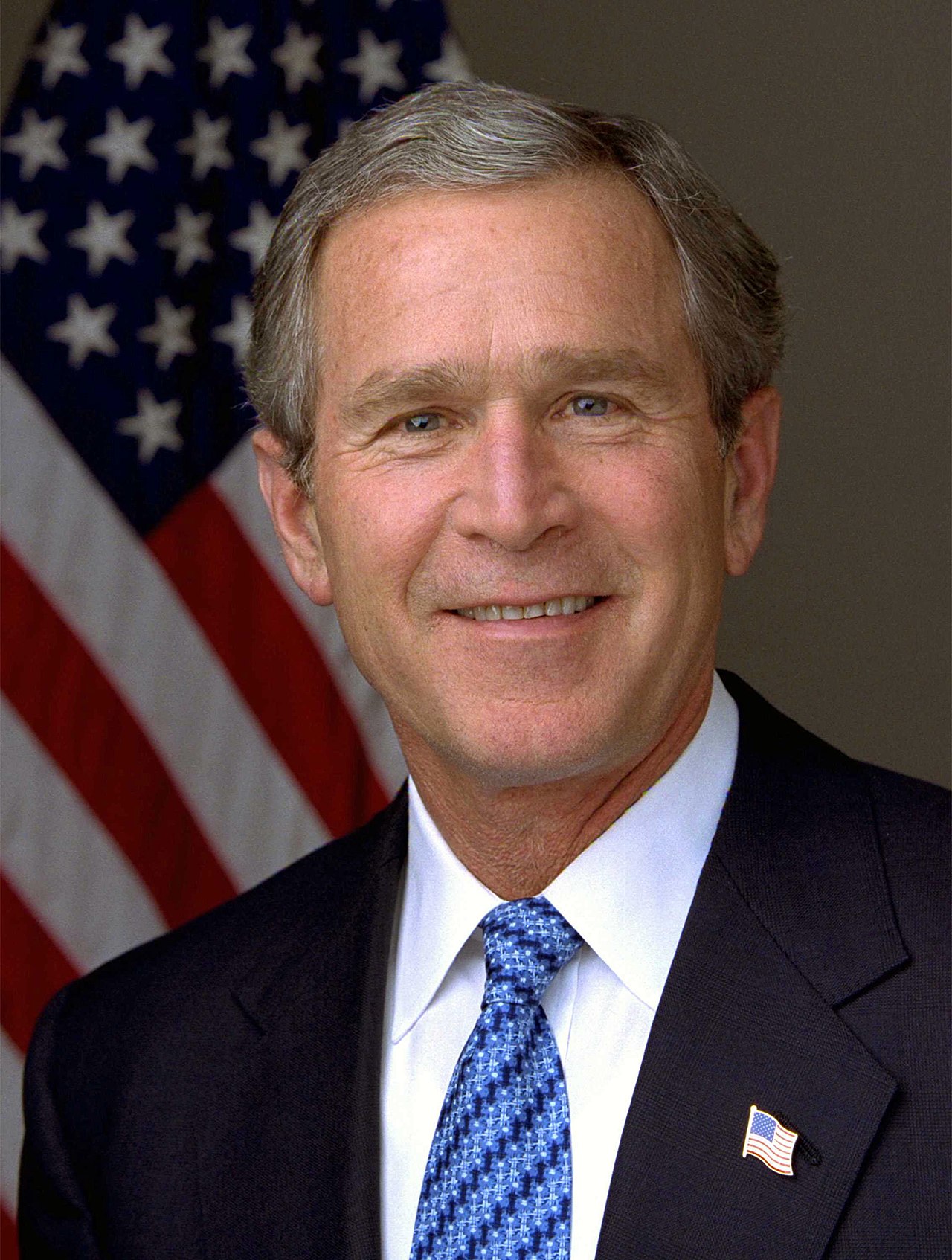
George W. Bush
Early Life and Academic Background
Born on July 6, 1946, in New Haven, Connecticut, George Walker Bush was the first child of George H. W. Bush and Barbara Pierce.
He spent his formative years in Midland and Houston, Texas. His family background was deeply rooted in public service, with his grandfather serving as a U.S. senator and his father eventually becoming the 41st president. Bush attended Phillips Academy in Massachusetts, where he was active in sports and served as head cheerleader.
He later attended Yale University, graduating with a Bachelor of Arts in history. During his time at Yale, he was a member of the Delta Kappa Epsilon fraternity and the Skull and Bones society. In 1973, he enrolled at Harvard Business School, graduating in 1975 with a Master of Business Administration.
He remains the only U.S. president to have earned this specific degree, which provided him with a unique perspective on economic management and corporate structure.
Military and Business Career
In 1968, Bush joined the United States Air Force and was commissioned into the Texas Air National Guard. He trained to fly Convair F-102 fighter jets, serving at Ellington Field. His military service has been a topic of historical interest, with all records eventually released by the Department of Defense in 2005.
Following his service, Bush entered the private sector. He founded Arbusto Energy, an oil exploration company, in 1977. His business career eventually led him to purchase a controlling interest in the Texas Rangers, a Major League Baseball team, in 1989.
As the managing general partner for five years, Bush became a public figure in Texas, often seen sitting in the stands with fans. This period allowed him to build a reputation as a relatable leader, which proved instrumental when he transitioned into the political arena.
The Governorship of Texas
Bush entered politics by running for the U.S. House of Representatives in 1978, though he was unsuccessful. He later served as a key advisor during his father's presidential campaigns. In 1994, he successfully ran for governor of Texas, defeating the incumbent Ann Richards.
His tenure as the 46th governor was marked by a focus on welfare reform, education, and criminal justice. He successfully pushed for significant tax cuts and implemented policies that increased school funding and set higher academic standards. Notably, he signed legislation that required electric retailers to purchase energy from renewable sources, a move that helped Texas become the national leader in wind-generated electricity.
His popularity in Texas was immense; in 1998, he was re-elected with 68 percent of the vote, becoming the first governor in Texas history to serve two consecutive four-year terms.
The 2000 Election and First Term
In the 2000 presidential election, Bush ran on a platform of compassionate conservatism. The election was historically close, culminating in the Supreme Court case Bush v. Gore, which halted a recount in Florida.
Bush won the presidency with 271 electoral votes, despite losing the popular vote. His first term was defined by the September 11, 2001, terrorist attacks, which fundamentally reshaped his administration's priorities. In response, he created the Department of Homeland Security and initiated the war on terror, including the invasion of Afghanistan to dismantle al-Qaeda and the Taliban.
Domestically, he signed the No Child Left Behind Act and a major tax-cut program. He also launched the President's Emergency Plan for AIDS Relief in 2003, a significant global health initiative.
Second Term and Post-Presidency
Bush was re-elected in 2004, defeating John Kerry. His second term focused on free trade agreements and judicial appointments, including Supreme Court Justices John Roberts and Samuel Alito. However, his administration faced significant challenges, including criticism over the handling of Hurricane Katrina and the Iraq War.
In 2007, the U.S. entered a major recession, leading to the creation of the Troubled Asset Relief Program to stabilize the financial system. Bush left office in 2009 as his approval ratings were heavily impacted by the economic crisis. Since leaving the White House, he has returned to Texas and maintained a low public profile.
As of October 2026, historians continue to analyze his presidency, often noting the profound impact of the events of 2001 on his administration's legacy.
See also
Based on content from Wikipedia · Licensed under CC BY-SA 4.0